
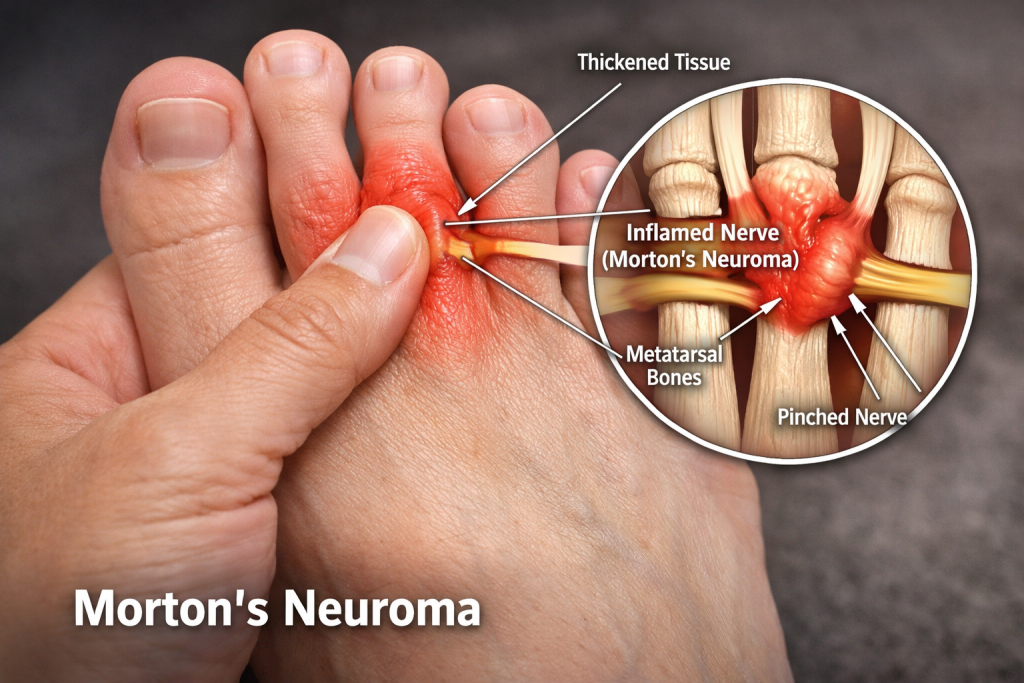
A Morton’s neuroma is a painful thickening of tissue around a nerve in the foot, usually between the 3rd and 4th toes. A neuroma is irritated, swollen nerve tissue caused by repeated pressure or compression. The nerve gradually becomes thicker and more sensitive over time. Common symptoms include sharp, burning pain in the ball of the foot. Patients commonly report the feeling of “standing on a pebble”, tingling or numbness in the toes, or pain that gets worse with tight shoes or walking. Common causes of a neuroma include tight or narrow shoes, high impact activities, or flat foot/ high arch foot types.
Why do patients experience so much pain?
The nerve travels between the metatarsal bones and when compressed repeatedly, can become inflamed, and surrounding tissue thickens.
Treatment for Morton’s neuroma usually follows a step-by-step approach—starting with simple, non-invasive options and only moving to procedures if symptoms persist.
1. Conservative Treatments
These work for many people, especially early cases.
Footwear changes
- Switch to wide toe-box shoes (avoid tight or high heels)
- Good arch support to reduce pressure on the nerve
Orthotics
- Metatarsal pads help spread the bones and relieve nerve compression
- Often one of the most effective non-surgical options
Medications
- Anti-inflammatory drugs
- Help reduce pain and swelling (short-term relief)
2. Injection-Based Treatments
Corticosteroid injections
- Reduce inflammation around the nerve
- Can provide relief for weeks to months
- Repeated injections are usually limited
Alcohol (sclerosing) injections
- Gradually shrink the nerve by damaging it
- Series of injections required
- Mixed long-term success rates
4. Surgery
Considered when all else fails.
Neurectomy
- Removal of the affected nerve
- High success rate (75–90%)
- Causes permanent numbness between toes
Decompression surgery
- Relieves pressure without removing the nerve
- Less numbness risk but slightly less predictable
